

By Ferdinand Mbonihankuye
Thousands of women in the hills of Burundi provide most of the care work without pay. Their role, which is essential to a fragile health system, remains invisible in public policy. While neighbouring countries are professionalising their community workers, Burundi faces a choice: continue to ignore this economic pillar or finally give it the place it deserves.
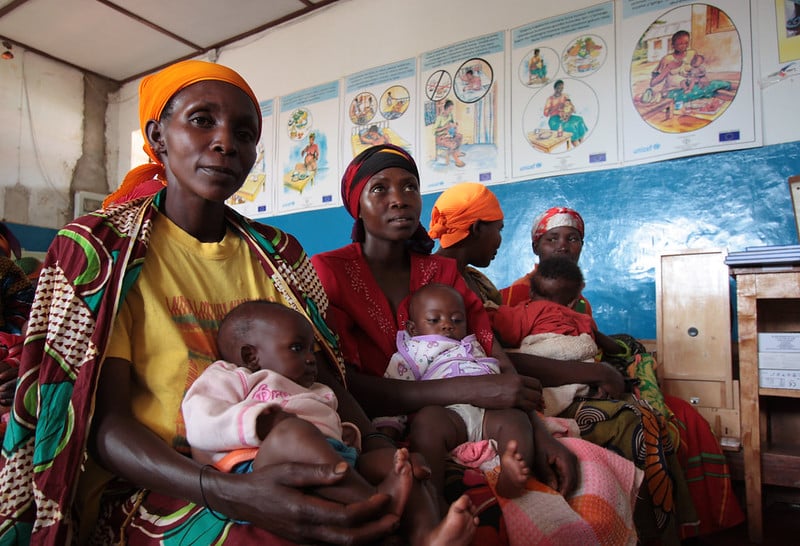
Community health workers are present in every hill in Burundi. Each hill has more than one CHW. They give their heart and soul and work almost every day and every hour, with no fixed salary except for incentive bonuses to improve the living conditions of the population during seminars once a month or every three months. We met two female community health workers in the commune of Rutana in Buhumuza province.
Fides Ndayisaba’s days begin at five o’clock on Birongozi Hill in the commune of Rutana. At 50 years old and mother of six children, she juggles working in the fields, domestic chores and her role as a community health worker, a position she has held for nearly a decade. Screening for malaria, supporting patients and raising awareness about reproductive health: her commitment shapes local healthcare. Yet she receives no fixed salary, only a few irregular bonuses.
Like her, thousands of Burundian women support the health system on a daily basis. They screen, refer, advise and reassure. Their role is discreet but central. Without them, many rural areas would be deprived of primary health care.
An overlooked pillar of healthcare
In the province of Cibitoke, a project carried out between 2014 and 2016 enabled nearly 60,000 children under the age of five to receive treatment for malaria, pneumonia and diarrhoea. Using a cascade approach, 393 community health workers were trained and then passed on their knowledge to more than 3,500 volunteers. Even more impressive, more than half of the children treated were seen within 24 hours of the onset of symptoms, and nearly two-thirds were treated directly at home. This proximity to care saves lives by reducing the distances mothers have to travel, thereby transforming attitudes towards the disease. These results demonstrate the tangible impact of community workers like Fides, whose daily dedication is the first link in a vital chain of care for rural communities.
The work of community health workers is central to meeting essential needs: prevention, distribution of medicines, family planning, support for adolescents, monitoring of high-risk pregnancies. In remote provinces, they are often the first link between families and health centres.
Globally, advocates argue that this type of care work – much of it performed by women without pay – is a form of social and economic infrastructure. This perspective gained momentum at the recent World Summit for Social Development (WSSD) in Doha, where Pathfinder International and Women in Global Health convened a global dialogue on the future of the care economy. Speakers emphasized that care work is not just a social good but a driver of economic growth, inequality reduction, and health system resilience. One of the strongest arguments: every shilling invested in preventive care can save multiples in curative costs, as demonstrated in Kenya.
Kenya’s reforms offer an example: more than 100,000 community health workers, long considered “volunteers,” are now salaried and recognized in national and county budgets. What was once project-funded is now treated as part of the essential workforce required for universal health coverage.
These discussions also highlighted the role of women-led enterprises in strengthening local health systems. FemVive – a women-centered health and wellness social enterprise incubated through Pathfinder’s Women & Co platform – illustrates a new model emerging across East Africa. FemVive supports women entrepreneurs who serve as trusted last-mile distributors of health and wellness products in underserved communities. The model builds on the social capital women already hold, demonstrating that with the right training and investment, women can be both caregivers and system builders, driving economic opportunity while improving access to essential services.
A challenge for justice and development
According to recent data, Burundian women bear a significant burden. Across sub-Saharan Africa, women spend an average of 5 hours and 30 minutes more than men on unpaid care work each day. In Burundi, where 84% of women are self-employed and 92% work in agriculture, this imbalance translates into a triple burden: agricultural work, domestic tasks and community care. Community health workers thus fill the gaps in an underfunded system, while simultaneously fulfilling their family and economic responsibilities. This reality illustrates what researchers call the ‘invisible infrastructure’: an essential support system that keeps society afloat but remains absent from national budgets and public policies. Recognising this contribution as an economic pillar would require integrating care work into development strategies, a step that several neighbouring countries have already started to take.
For Burundi, such examples offer important lessons. CHWs carry the bulk of prevention and early detection responsibilities in rural hills, reducing health complications that are costly for families and the health system alike. Yet their contribution remains under-recognized in national budgets. As researchers like Sonia Phalatse of the Southern Centre for Inequality Studies note, the value of care work is often underestimated because women simultaneously shoulder unpaid domestic labor, agricultural work, and income-generating activities—filling gaps left by under-resourced public systems.
A political choice for the future
Recognizing and compensating CHWs is not only a matter of fairness. It is a strategic investment. Reducing the unpaid care burden on women by even a quarter is estimated—globally—to add trillions of dollars to the economy by 2040. For Burundi, integrating CHWs into formal health strategy, funding, and labor protections could strengthen the entire health system without prohibitive cost.
The reforms undertaken in Kenya — remuneration for workers, dedicated laws, a specific budget — can inspire local adaptation. Integrating the care economy into national policies could bring about real change, driven by those who are already its pillars.
A lire également :community-health-workers-go-the-extra-mile-to-deliver-immunisation-in-burundi
Burundi already has a solid foundation for professionalising its community health system. With support from partners such as UNICEF and GAVI, more than 6,500 work kits including bicycles, mobile phones and raincoats have been distributed to health workers since 2018, facilitating their travel and communication. Digital systems such as RapidSMS already enable workers to report urgent cases directly to health centres, saving lives in real time. These innovations show that targeted investments can transform the effectiveness of community work. However, these initiatives remain dependent on external funding and ad hoc projects. For these advances to become sustainable, the Burundian government must take the decisive step of integrating community health workers into the civil service with stable remuneration, social protections and official recognition of their role. Only then will the country be able to build a resilient health system that is rooted.
Back in Rutana, Fides will rise again tomorrow at five. Her work will be long, essential, and largely invisible. But models from the region—and lessons from global dialogue—show that another future is possible: one where the women holding Burundi’s health system together are no longer the country’s most overlooked assets.